1
day
1 day. Arrival in Tokyo. Meeting and transfer to the hotel.
00:00 - 24:00
Arrival in Tokyo. Arrival at Narita International Airport, meeting with a Russian guide and transfer to a five-star hotel located in the city center. Excursion before checking into the hotel Here you can spend a few hours to recover after the flight
Full description
After meeting your guide in the lobby, you will go to downtown to see the majestic building of the Parliament, the Imperial Palace park with Japanese Matsu pine trees, plus the double-arched stone bridge of Nijubashi, the Asakusa Kannon temple, the Yagoda temple, and eight ancient Buddha statues, and, finally, Nakamise street, where you can buy authentic and inexpensive souvenirs.
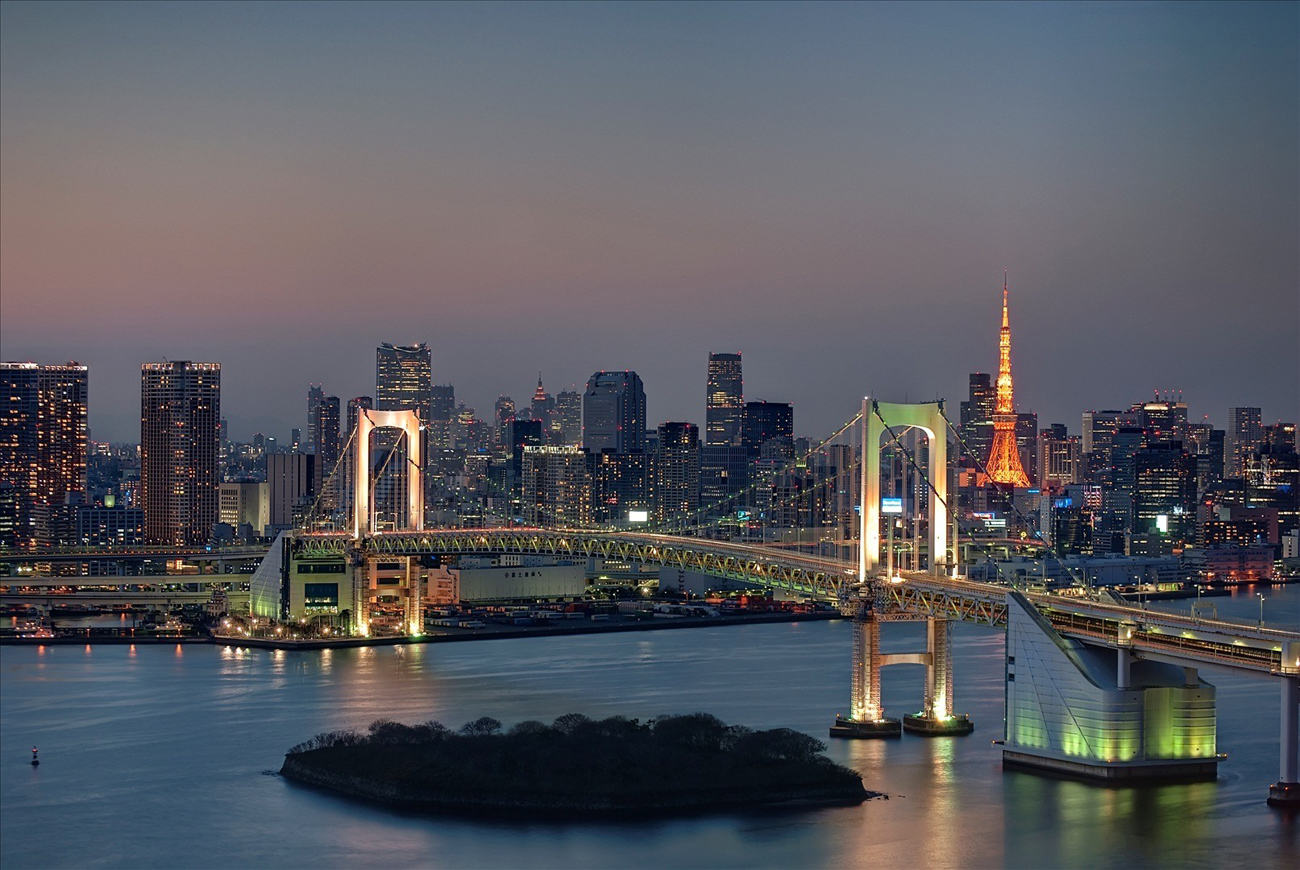
Later, you will move to Odaiba island, built in Tokyo Bay in the 1850s to keep enemy ships out. 8Let's start a picturesque journey around the island: from Deisan Historical park with the remains of defensive structures to the futuristic Fuji TV building. Finally, ride the gigantic 115-meter high Ferris wheel to enjoy a stunning view of the evening Tokyo skyline.
2
day
Tour of Tokyo
00:00 - 24:00
The “Eastern capital” is at your feet. Meeting with a guide and sightseeing tour of the Japanese capital.
Full description
The second Tokyo tour day begins with a trip to Ginza, the most luxurious district of Tokyo. Ginza’s vibes are the mix of “high fashion” and “haute cuisine”.. The hieroglyphs “Gin-Za” mean “Silver Workshop”, because once upon a time silver coins had been minted here... You will enjoy watching plenty of fancy flagship stores by leading Western and Japanese fashion brands, such as Dior, Chanel, Louis Vuitton, Hermes, and Mikimoto, designed by famous architects. Ginza is also home to luxurious, elegant restaurants, some of them are marked with Michelin stars. By the way, Tokyo ranks first in the world in the number of such “star” restaurants, ahead of Paris!
Choose from one of these restaurants for a gourmet afternoon lunch in Ginza.
After lunch, you will transfer to the trendy Harajuku and Omotesando Boulevard. These areas challenge Ginza in a fashionable way, with multi-storey boutiques lined up there. It would be a good idea to visit Omotesando Hills shopping center, too. You will come back to your hotel after the excursion.
3
day
Kamakura
00:00 - 24:00
Shogun Headquarters. Meeting with the guide in the hotel lobby and excursion to Kamakura.
Full description
Kamakura is the medieval military capital of Japan. It was founded by Minamoto Yoritomi, the first shogun of Japan. The era when Kamakura was the capital gave its name to the historical period of the same name in the history of Japan.
After meeting the guide at the reception, you will start your excursion to Kamakura, the ancient military capital of Japan. The city is located on the Pacific coast and surrounded by picturesque mountains, making it an impregnable fortress for enemies. You will see the Shinto shrine Tsurugaoka Hachimangu, which is dedicated to the god of war. Then, you will walk the famous Wakamiya Oji road, which splits the city and leads to the shrine. The road runs between two ponds: one is called "Genji," which means life, and another is "Heike," which means death.
The next spot, the Kotoku family temple, includes the Great Bronze Buddha Daibutsu, which is 13.5-meters-high. The shrine was created in 1252 and survived severe fires, powerful earthquakes, and tsunamis. Then, you will see the three-level Hasedera temple. On top of a sacred hill is the famous gilded sculpture of the eleven-faced goddess Kannon, the tallest wooden sculpture in Japan, 9.5 meters high. Buddhist monks carved the sculpture from a single trunk of a camphor tree. Then, you will enjoy your lunch.
Moving to Fujisawa, the island of the samurai, on the top of the hill, you will see a sanctuary of the dragon of the seas, revered as the deity of loyalty and devotion. You will then visit the Cape of Love, where all lovers strive to strengthen their feelings. Iwaya Cave was carved out by water and served as a natural shelter during the samurai wars. After the tour is completed, you will come back to your hotel.
4
day
Kyushu
00:00 - 24:00
Beppu: From Hell to Heaven! Meeting with a representative of the Tokyo Lion House company and transfer by executive car to Haneda Airport and flight to Kyushu Island.
Full description
Upon arrival at Oita airport, you will meet your guide and transfer to a hotel in Beppu.
The city of Beppu could be more interesting; however, the same cannot be said about its surroundings! The Japanese call it simply: hell. There are several "hells" near Beppo, and everyone can find their infernal world to their liking! Their names are already interesting: "Hell of the Golden Dragon," "Hell of the Bloody Pond," "Hell of the White Pond," and even "Hell of the Devil's Mountain." Beppu is one of our planet's most powerful areas of geothermal activity. The blood-red color of the water is explained by the presence of iron oxides in it, and "Devil's Mountain Hell" is so called due to the local crocodile farm, where its inhabitants – who look like true devils – are truly in heavenly conditions! Beppu ranks first in the world regarding the number of hot mineral springs!
There are eight thermal springs – onsen – in the area, known as "hells". However, for your health, it is truly a paradise. Healing mineral water containing iron, magnesium, sulphur, and radon attracts hundreds of thousands of tourists from all over Japan and beyond its borders to Beppo. Today, Beppo is a vast tourist area with developed infrastructure.
Interestingly, Beppu is famous for its onsens, which is quite typical for Japanese resorts, and its healing mud. For example, one of the local geysers, called "Mountain Hell," spews out not hot mineral water but warm mud! The source "Hell of a Buddhist Monk" is also famous for this. According to an ancient legend, once upon a time, a geyser burst here right under the feet of a monk who just decided to pray. He was thrown up and then thrown straight into the smoking crater!
Another source with the romantic name "Sea Hell" is a boiling lake with green transparent water, somewhat similar to the colour of seawater. This beautiful colour is due to iron sulphate in the water. The water in this source is boiling: its temperature reaches 94 degrees Celsius!
Hot thermal water is transported through wooden pipes daily to Beppu's private homes and ryokan hotels, where it is used to fill hot baths. In some hotels, you can take unique sand baths that warm the body and bring a long-lasting healing effect.
There are many different "hells" in Beppu; however, this is not the underworld, but a genuine paradise.. In the evening, after completing the excursion, already at the ryokan, it is recommended to take a bath filled with scalding mineral water again to enjoy the true spirit of Beppu.
5
day
Aso-Kuju
00:00 - 24:00
Aso Volcano: on the site of an ancient catastrophe. Meeting with the guide at the hotel. Departure to the Aso-Kuju region.
Full description
...once upon a time, a global cataclysm occurred. The volcano - the size of modern Fuji - exploded due to a powerful eruption. This volcano ceased to exist. Vast masses of dust and ash rose into the air, spreading throughout the planet, covering the Sun and causing a volcanic winter. Global cooling has occurred on Earth for many years. Finally, a gigantic caldera has formed. This catastrophe happened 90,000 years ago on the island of Kyushu when there were no people yet…
Nowadays, what remains of the ancient Aso volcano is what people call the Aso-Kuju National Park today. It is located in Kumamoto Prefecture. The route to the caldera passes through lovely places, through fields of emerald green under a deep blue sky; these are truly breathtaking views!
The caldera forms five volcanic cones; its circumference is as much as 130 kilometers. Inside, it is not apparent that this is the crater of an exploded volcano! Instead, it looks like a Martian crater. Today, tens of thousands of residents live on the territory of the caldera, and even a railway has been built. Among its five newly formed peaks, the highest and most active is Nakadake (elevation 1,592 m), which occasionally erupts with choking sulphur dioxide gases. The Aso volcanoes erupt constantly; the strongest eruptions occurred a long time ago, in 210 and 552, and more recently, in 1979. The Aso Volcano Museum is also located here, where you can watch videos of caldera volcanic eruptions in different years.
Since time immemorial, there has been a Shinto shrine on the slopes of Aso, Aso Jinja, dedicated to the spirit of the mountain. According to some sources, this sanctuary was erected about two and a half thousand years ago, which sends us back to the Jomon era!
It takes just 10 minutes by cable car to reach the Nakadate Crater. For safety reasons, special shields have been installed along the crater's edges since the volcano is constantly smoking, and an eruption can occur at any moment. From the observation deck, you can look down into the terrifying Nakadate vent, where matte clouds of sulphur steam rise from a gray-green lake at a depth of 100 meters. Here, you can also buy samples of volcanic rock, for example, yellowish sulphur crystals or multi-coloured lava. The surroundings of the craters are picturesque in their way, although they are lifeless landscapes, similar to Io's surface, Jupiter's satellite.
Returning to the living green sea of the Kyushu subtropics after completing this extreme expedition will be nice. After you tour Aso-Kuju National Park, you will be transferred back to your hotel.
6
day
Takachiho
00:00 - 24:00
Takatiho, where the gods descended to earth. Meeting with the guide at the hotel. Departure to Takachiho.
Full description
...once upon a time, a global cataclysm occurred. The volcano - the size of modern Fuji - exploded due to a powerful eruption. This volcano ceased to exist. Vast masses of dust and ash rose into the air, spreading throughout the planet, covering the Sun and causing a volcanic winter. Global cooling has occurred on Earth for many years. Finally, a gigantic caldera has formed. This catastrophe happened 90,000 years ago on the island of Kyushu when there were no people yet…
Nowadays, what remains of the ancient Aso volcano is what people call the Aso-Kuju National Park today. It is located in Kumamoto Prefecture. The route to the caldera passes through lovely places, through fields of emerald green under a deep blue sky; these are truly breathtaking views!
The caldera forms five volcanic cones; its circumference is as much as 130 kilometers. Inside, it is not apparent that this is the crater of an exploded volcano! Instead, it looks like a Martian crater. Today, tens of thousands of residents live on the territory of the caldera, and even a railway has been built. Among its five newly formed peaks, the highest and most active is Nakadake (elevation 1,592 m), which occasionally erupts with choking sulphur dioxide gases. The Aso volcanoes erupt constantly; the strongest eruptions occurred a long time ago, in 210 and 552, and more recently, in 1979. The Aso Volcano Museum is also located here, where you can watch videos of caldera volcanic eruptions in different years.
Since time immemorial, there has been a Shinto shrine on the slopes of Aso, Aso Jinja, dedicated to the spirit of the mountain. According to some sources, this sanctuary was erected about two and a half thousand years ago, which sends us back to the Jomon era!
It takes just 10 minutes by cable car to reach the Nakadate Crater. For safety reasons, special shields have been installed along the crater's edges since the volcano is constantly smoking, and an eruption can occur at any moment. From the observation deck, you can look down into the terrifying Nakadate vent, where matte clouds of sulphur steam rise from a gray-green lake at a depth of 100 meters. Here, you can also buy samples of volcanic rock, for example, yellowish sulphur crystals or multi-coloured lava. The surroundings of the craters are picturesque in their way, although they are lifeless landscapes, similar to Io's surface, Jupiter's satellite.
Returning to the living green sea of the Kyushu subtropics after completing this extreme expedition will be nice. After you tour Aso-Kuju National Park, you will be transferred back to your hotel.
7
day
Kumamoto
00:00 - 24:00
Kumamoto: battle sites of the Last Samurai. Meet your guide and go on a tour of Kumamoto.
Full description
Kumamoto Castle is one of the most famous castles in the country: it is declared the "National Treasure of Japan." Here, Saigo Takamori, the famous Samurai, challenged Emperor Meiji during the Satsuma Rebellion in 1877. After several days of siege by imperial troops, the castle was taken by storm. Saigo Takamori became the prototype of the Katsumoto character in the "The Last Samurai" movie, with Tom Cruise starring as the main character.
Today, Kumamoto Castle is a historical museum with exhibits dating back to the Samurai era. The castle's windows offer a breathtaking panorama of the modern city of Kumamoto.
The Suizenji-ko-en landscape garden is one of the country's six most beautiful and is considered the "National Treasure of Japan." The most characteristic sights of all 53 stations of the famous Tokai-Do highway, the route from Kyoto to Edo, are reproduced here. Tokai-do is one of the most popular subjects in Japanese art. For example, the famous wood print "Tokai-Do 53 Stations" by Ando Hiroshige is dedicated to it. In the garden, you can see miniature Fuji, Lake Biwa, and the tea houses where travellers stopped for the night. All these landscapes were revealed to wanderers on the actual Tokai-Do road.
The Dento Kogeikan Crafts Museum displays ceramics, dolls and products from mahogany. Among the local crafts, amakusa pearls are valued; they are mined in the waters of the island of the same name. Weaponry made from Damascus steel and the famous yama-ge lanterns are also considered precious and fun to see. You will return to your hotel in Kumamoto after the tour is finished.
8
day
Ibusuki
00:00 - 24:00
Ibusuki: Underground Heat Healing Heat. Meeting with the guide at the hotel and transfer to the Ibusuki resort area. Transfer to the hotel.
Full description
The town of Ibusuki is a popular seaside resort, famous for its unusual black sand beaches and its sand baths, sunamushi for three centuries. A hole is dug in the sand, about 15 centimeters deep and approximately the length of a human person. If you lie down in such a hole, the whole body is gradually “buried” in the sand with the help of assistants. The sand temperature is 55 degrees C. It is impossible to endure such heat in the water. In this case, the air between the sand grains serve as a perfect insulator so that one can stay there for up to 20 minutes.
People go to this resort to experience such pleasure and simultaneously heal themselves.
Ibusuki also has the famous Tosenkyo restaurant near Lake Ikeda in the park. People come here to taste cold nagashi-somen noodles, an extremely popular local variety!
At the end of the excursion, you will return to the hotel.
9
day
Kagoshima
00:00 - 24:00
Kagoshima is the “Naples of Japan.” Meeting with the guide and transfer to Kagoshima.
Full description
Kagoshima was a sea trade center with Okinawa, China, and Western countries for centuries. Foreigners have been arriving in Japan through these sea gates in the Middle Ages. This is why Catholicism took deep roots in Kagoshima until the Tokugawa shogun banned it in the late 16th century. St. Francis Javier Memorial commemorates the Christian tradition in Kagoshima. In Japan, Kagoshima was called the local "Naples": the city lies on the shores of a picturesque bay, genuinely reminiscent of Naples Bay. The stunningly beautiful Sakurajima volcano resembles Mt. Vesuvius.
Kagoshima enjoyed connetions to the Ryukyu Kingdom, China, and Western countries throughout its history; it led to curious culinary outcomes. Sweet potatoes are more popular here than rice, which is unusual for Japan but common in Okinawa. You should try the local version of the typical Japanese dish "tonkatsu" - pork breaded with breadcrumbs. Local tonkatsu is not breaded but covered with caramel glaze, which gives it an unusual taste.
One of Kagoshima's most famous tourist attractions is Iso Park, named after the mountain in its vicinity. It was designed as a garden surrounding the estate of the rulers of Shimazu, and today it is open to tourists. The exhibition of the famous Reimeikan Museum tells about the 700-year history of the Principality of Shimazu. Many relics dating back to this period and various exhibits related to the Meiji Revolution and Japan's modernization era are on display here. The Chiran-Cho Museum is of interest to those interested in the history of World War II.
It's also worth stopping by one of the shops where you can buy famous local ceramics, satsuma-yaki. The Kagoshima Aquarium is also fascinating; it is located in the old port area.
The city tour will end with dinner at a local restaurant. You will transfer to your hotel afterwards.
10
day
Yakushima
00:00 - 24:00
Yakushima is a tropical paradise in the southern seas. Meeting with your guide and departing by ferry to Yakushima Island (optional, you can also fly from Kagoshima Airport on a local airline). On the island itself - travel in an executive car with a Russ
Full description
..on Earth, there are unique places where many strive to get, but only some succeed. These places are hard to access, but each has its history, vibes, and energy.
Yakushima Island is one such place. It is 130 kilometres south of Kagoshima, a mountainous island with a tropical forest. Hunting, logging or settlements are prohibited here. The local nature is untouched by humans; it still looks like it was in the last Ice Age.
The island enjoys the highest rainfall levels in Japan. It rests on a granite foundation, just like Manhattan, so there is no threat of earthquakes. Yakushima is a unique wildlife sanctuary and a UNESCO World Heritage Site.
The picturesque local mountains - the Soaring Alps, waterfalls, white sand beaches, coral reefs, and virgin forests make Yakushima a natural paradise on Earth. Hot springs look very unusual here: they bubble up from the bottom right into the shallow waters; at low tide, you can swim and take scalding thermal baths!
Among the local Japanese cedars are unique trees whose age exceeds 7,000 years! They are called "Jomon-sugi," which translates as "cedars of the Jomon." which is the most ancient period in Japanese history.
The stunning Sampiro Waterfall is another Yakushima landmark. It is 88 meters high and ranked in Japan's top 10 most beautiful waterfalls.
Yakushima is a true paradise, a unique natural park, and one must visit it at least once!
Upon completing the island tour, you will return to Kagoshima by ferry.
11
day
Free day in Tokyo
00:00 - 24:00
Tokyo of your choice! Private transfer to Kagoshima airport for flight to Tokyo. Arrival in Tokyo and independent transfer to the hotel. Free day in Tokyo, on this day you can choose and order a thematic tour to suit your taste.
Full description
On this day, you can choose a tour of your own. You may visit Yokohama, Japan’s second largest city, an epicenter of new trends and ideas. You will walk into Minato Mirai 21, meaning the Port of Future 21, full of ultramodern architectural masterpieces. Minato Mirai’s centerpiece is the Landmark Tower, built in 1993 by the American Hugh Stubbinson architectural bureau. It is a 300-meter-high skyscraper, one the tallest buildings in the country.
You will walk through Yamashita Park, one of the most beautiful parks in the city. From its observation deck, you will enjoy an unforgettable view of Yokohama Bay and the 890-meter long bridge. You will also check out "Hikawa Maru" (Queen of the Pacific Ocean) ship, now a museum, forever moored to the pier. And the Marine Tower building – “Sea Lighthouse”, located near Minato Mirai, is the tallest structure of its kind in the world. After the tour, you will come back to your hotel.
Other options could be visiting famous Japanese Disneyland or DisneySea.
12
day
Departure from Tokyo
00:00 - 24:00
Sayonara, Nippon! Meeting by a representative of the Tokyo Lion House company and transfer to Narita Airport by executive car. Departure from Japan.
Full description
This day, you will say good bye - but not a farewell - to Japan. You will enjoy your individual transfer to Narita or Haneda airport.


 Top
Top