2
day
Tokyo
09:50
Meeting with the guide in the hotel lobby.
10:00-18:00
Tour of Tokyo.
Full description
The tour begins with a trip to the Imperial Castle and the Government Quarter. Japanese matsu pines grow in the Imperial Palace’s park and carps, a sacred fish in Japan, can literally be seen in the channel that surrounds the Palace.
Then, you will move to Ginza, Tokyo’s most luxurious district. This region, adjacent to the Imperial Palace, has been the city's historical center since Japan opened up to the outside world. The symbol of Ginza is the Waco building, the luxury department store, and the Art Nouveau masterpiece. It is located at Ginza Forth Crossing, Tokyo's Times Square. The hieroglyphs "Gin-Za" mean "Silver Workshop" because they minted silver coins there back in medieval times. The world's leading fashion flagship stores, such as Chanel, Dior, Mikimoto, Cartier, and Louis Vuitton, lined up on Ginza Dori Street. All these architectural landmarks were designed by the most famous architects in the world. Ginza is also home to many traditional Japanese shops and luxurious restaurants that have existed here for several decades.
Then, it would be the right time to visit the new – world's tallest TV tower – Tokyo Sky Tree. Climb up to the observation deck at an altitude of 345 meters! The tower's four elevators make 600 meters per minute, and each elevator symbolizes one of the four seasons. Interestingly, the height of the tower – 634 meters – is very symbolic. The sequence of these numbers in Japanese is rendered as "mu," "sa," and "si," which is phonetically consonant with "Musashi," which was the ancient name of the site's area.
.
3
day
Fuji-Hakone.
08:50
Meeting with the guide in the hotel lobby.
9:00-19:00
Excursion to Mount Fuji and Hakone National Park.
Full description
After breakfast, your guide will meet you at the reception.
Hakone is a lovely forested hilly area, full of onsen and ryokan, located in the Five Lakes area nearby Mt. Fuji, famous for its scenery and natural beauty. It’s been known as a place for leisure for Japanese for centuries.
Your first stop is the Hakone Shrine, hidden in a picturesque cedar forest. This beautiful Shinto shrine is a well-known power spot. You are in a great position to get some ancient energy there.
Then, you will have a joyful ride on the Hakone Ropeway down to the famous Owakudani Valley. On the way, you will enjoy a fantastic Mt. Fuji view if the weather permits. Try a local specialty: black eggs cooked in natural volcanic vents. Boil your egg in one of the vents; according to the local legend, eating an egg adds seven years to your life!
For lunch, you will have hoto, a hot udon noodle dish historically served in an iron cast pot for lunch. Finally, you will visit Hakone Open-Air Museum to enjoy viewing various installations while strolling down the stunning landscapes of Hakone.
At the end of the day, you will come back to your Tokyo hotel.
4
day
Tokyo-Kyoto.
06:00-07:00
Breakfast at the hotel and check out.
07:50
Meeting with the guide in the hotel lobby.
08:00
Transfer to the station Tokyo.
09:00
Travel by high speed train to Kyoto.
11:20
Arrival in Kyoto, meeting with the guide at the train carriage.
11:30-18:00
Tour of Kyoto.
Full description
You will enjoy a day trip to Kyoto, you will arrive there by 1st class Shinkansen bullet train.
Kyoto is the ancient imperial capital of Japan, one of the oldest cities in the country, the entire historical part of which is a UNESCO World Heritage Site. Kyoto was founded in the 8th century and served as the Imperial residence for almost twelve centuries. Among its numerous temples and sacred sites in Kyoto, one can highlight the Sanjusan-gendo temple, built back in 1164. Even today, it is the longest wooden structure in the world. In the long central hall, in the twilight, there are 1001 statues of the goddess Kannon the Merciful. You will have a lunch break then at a traditional Japanese restaurant.
Another Kyoto gem is the Kinkaku-ji, also known as the Golden Pavilion, an elegant three-level temple with its roof covered with thin sheets of gold. The building is also topped with a traditional bronze phoenix. The temple is located in a magnificent garden from the Muromachi period. Nearby is the world-famous Zen rock garden of Ryoanji: its fifteen stones seem to be randomly scattered on the white gravel, but from any point only fourteen can be seen...
The Silver Pavilion, Ginkaku-ji, is another architectural masterpiece. The temple is gracefully reflected in the adjacent lake, making it a classic Kyoto view... Finally, you will walk down the open veranda of Kiyomizudera, or the Temple of Pure Water. You will enjoy a stunning Kyoto panoramic view. The local legend says that if you take three sips from the adjacent spring, your wish will come true! You will wrap up your Kyoto’s experience by visiting the legendary Geisha Gion quarter, which has been a center of entertainment since ancient times. You will come back to your hotel after that.
5
day
Nara.
07:00-09:00
Breakfast in the hotel.
09:50
Meeting with the guide in the hotel lobby.
10:00- 18:00
Excursion to Nara.
Full description
The city is very close to Kyoto, just half an hour away. During its foundation, several majestic temples have been built here. For example, the Todaiji Temple, which was completed in 725. This is one the greatest wooden structures on Earth. Todaiji now is a UNESCO World Heritage Site. This temple is dedicated to the Buddha of Infinite Light incarnation, embodied in the sun. Inside, there is a gigantic bronze Buddha statue, the largest in Japan.
In the 5th century AD, Japan borrowed a lot from China and Korea in terms of civilizational development. Religion was one of these gifts from Asia's mainland. Japanese have also borrowed writing, architecture, and even urban planning that dominated the Chinese Tang Dynasty style back then. This is why Nara, as Japan's first permanent capital, was built on the model of Changyan, the capital of China at the time.
Near Todaiji, another Buddhist temple, Kofukuji, is located; it was built in the 7th century. Its pagoda, Goju-no-to, is one of the tallest in the country. This "skyscraper from the past" is 55-meter high! The Goju-no-Pagoda is the most famous graphic symbol of Nara.
Thanks to Nara's compact site, people usually come here for just a day, which is enough to see all the sights. Of course, the Kasuga Taisha Shinto Shrine is also worth your attention. At the entrance to the temple, there is a wisteria tree, whose age is estimated to be 800 years! Inside, on the temple grounds, is a Japanese cedar tree, which is around ten centuries old! All year round, the temples in Nara host various Buddhist and Shinto religious festivals.
You will be transferred by car to the railway station, where you will board the Shinkansen super express to Tokyo. Upon arrival in Tokyo, you will check in to your hotel.
6
day
Yoshino
07:00-09:00
Breakfast in the hotel.
09:50
Meeting with the guide in the hotel lobby.
10:00- 18:00
Excursion to Yoshino.
Full description
For centuries, Yoshino has been the center of the ancient mountain religion of Shugendo, which is a fusion of Buddhism and ancient local beliefs. Along with the Koyasan and Kumano temples, Yoshino was designated a UNESCO World Heritage Site in 2004, and the area as a whole is officially designated as the "Sacred Sites and Pilgrimage Routes of the Kii Mountain Range."
Mount Yoshino has long been considered Japan's most famous cherry blossom viewing spot. The first trees were planted here more than 1300 years ago. Today, in the mountain's vicinity, about 30,000 cherry trees start to bloom luxuriantly in early April. Also, during the excursion, you will ascend to the Takagiyama observation deck; from there, you will enjoy watching magnificent landscapes, especially during hanami, the cherry blossom season, when the mountain slopes seem to be covered with pink snow of different shades!
Buddhist Temple Sikurin is famous for its magnificent garden called Gunpo-en. It was defeated by the monk Sen no Rikyu, the founder of the tea ceremony in Japan. It is also home to one of Japan's oldest and most famous ryokan, traditional inns that previously served as a resting place for the yamabushi, Shugendo’s ascetic warriors.
7
day
Koya-san.
06:00-07:00
Breakfast in the hotel. Check out from the hotel.
07:30
Meeting with the guide in the hotel lobby.
07:40-18:00
Excursion to Koya-san.
Full description
After your breakfast at the hotel or ryokan, you will start at Koya-san, a famous natural park, an array of temples, and a UNESCO World Heritage Site.
Garan is the central place of the Koya-san Temple, built by the famous monk Kobo Daishi. Over the centuries, the complex has grown significantly and now includes Kondo Temple, Daito Pagoda, Western Saito Tower, Miedo Hall and several other shrines. Okunoin Temple is dedicated to the monk Kobo Daishi (also known as Kukai), the founder of the Shingon school of Buddhism and one of the largest and most respected figures in Japanese religious history.
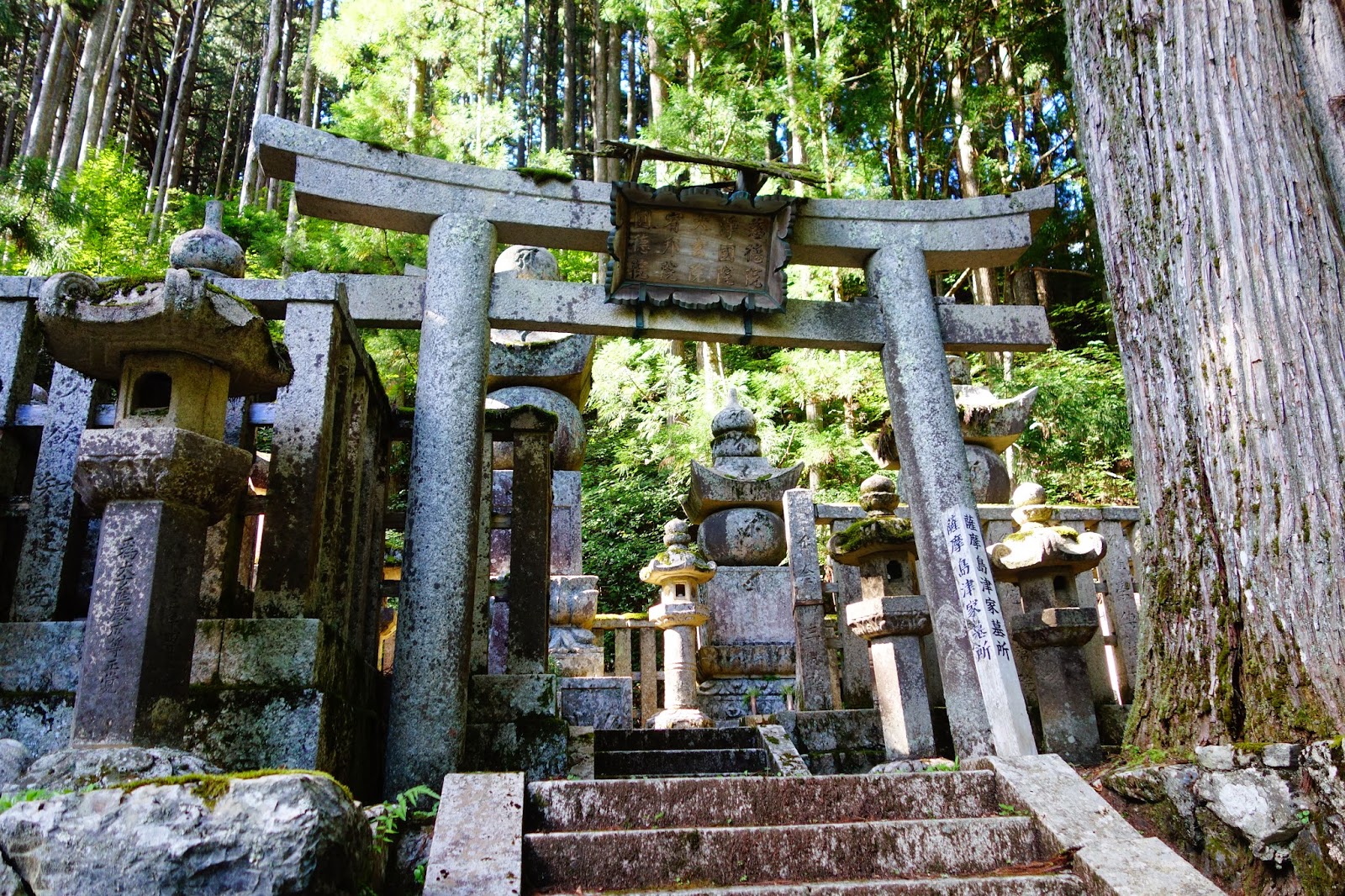
Koya-san is one of Japan's most famous places of power, where people from all over the country come to pray, meditate, and plunge into the local atmosphere of holiness and peace. Japan's largest cemetery surrounds the temple. The main temple of the Shingon school, founded in Japan by Koba Daishi at the beginning of the 9th century, is famous for its magnificent artistic decoration in the fusuma style.
The monastery adjacent to the temples is one of the main spiritual centers of Japan; thousands of pilgrims and tourists flock here. For the night here, it is best to stay in shukubo. These inns located on the temple's territory were initially intended for the rest of the incoming monks. Traditional Buddhist dishes based on vegetarian cuisine will be served for dinner and breakfast there.
8
day
Koya-san Osaka.
06:00-07:00
Morning prayer in the monastery.
07:10-08:00
Breakfast and check out.
10:30
Arrival in Osaka and independent transfer to the hotel.
You can take additional excursions
Full description
After a morning meditation at the Koyasan hotel-monastery, you will meet your guide for a day trip to see Himeji-jo in Osaka. It is considered the finest surviving example of Japanese classical castle architecture. Residents respectfully call it Hime-Sama or Madam Princess. A Japanese castle is usually associated with men, but not this one. For its dazzling white color and multi-tiered roofs, reminiscent of the wings of a gigantic bird, the fortress is also called the Castle of the White Heron.
The fortress's history dates back to 1346. Still, it acquired its current architectural splendour in 1609, when the ruler of the local lands, Prince Ikeda Terumasa, married a beautiful princess, Great Shogun Tokugawa's eldest daughter.
.
You will see the interiors of the largest surviving watchtower in Japan. The gigantic structure, designed to protect the city, is surprisingly harmonious and elegant.
In spring, sakura flowers dominate the landscape. There is so much white Yoshino with large petals that the sky and earth are almost invisible. The cascades of pink flowers on the Weeping Sakura and whole streams of Sakura-Waterfall branches fall into the smooth mirrors of the ponds. In the evening, when the torches are burning, the castle and the gardens are illuminated, forming a mystical sight!
You will see the place of the sacred ceremony of seppuku, the Kiku well. One can still hear a gentle voice in the night. At all times, Himeji-jo has been protecting the city, and the city repaid her handsomely. You will learn an amazing story about the rescue of the Princess. In December 1993, Himeji-jo was listed as a UNESCO World Heritage Site. After the excursion is finished, you will come back to your hotel in Osaka.
9
day
Kumano.
06:00-06:30
Breakfast at the hotel and check out.
06:50
Meeting with the guide in the hotel lobby.
07:00-18:00
Excursion to Kumano.
Full description
After your transfer to Osaka Station, you will get to the Kumano area for a guided tour. Kumano is home to three of the country's most famous Shinto shrines: Hongu Taisha, Nachi Taisha, and Hayatama Taisha. In 2004, Kumano's temples and pilgrimage routes were designated a UNESCO World Heritage Site under "Sacred Sites and Pilgrimage Routes of the Kii Mountain Range." Kumano is located along the ancient Ise-ji pilgrimage route, connecting Kumano shrines to Ise Shrine, the country's main Shinto shrine. Even now, one can see preserved sections of the ancient Matsumoto crossings – from Kumano station to Odomari; there is a two-mile-long trail.
According to a legend, Iwai Shrine is the resting place of the creators of the earth, the divine consorts Izanami and Izanagi. The sanctuary is located at the foot of a 45-meter cliff, a place of power of antiquity. Residents have been worshiping here for thousands of years.
The Shinto shrines Hongu Taisha, Nachi Taisha, and Hayatama Taisha were pilgrimage destinations to the Kumano region for centuries. It is believed that the shrines are very ancient since they are mentioned in the mythology of the founding of Japan, in particular, in Kojiki.
Kumano is also called the "Land of the Dead," the abode of Shinto spirits. Today, these places are considered sacred; many believe you can get healing from various diseases. Kumano was once an exclusively Shinto shrine. After the arrival of Buddhism to Japan in the 6th century AD, Kumano also acquired a sacred status in Buddhism due to the harmonious fusion of the two religions.
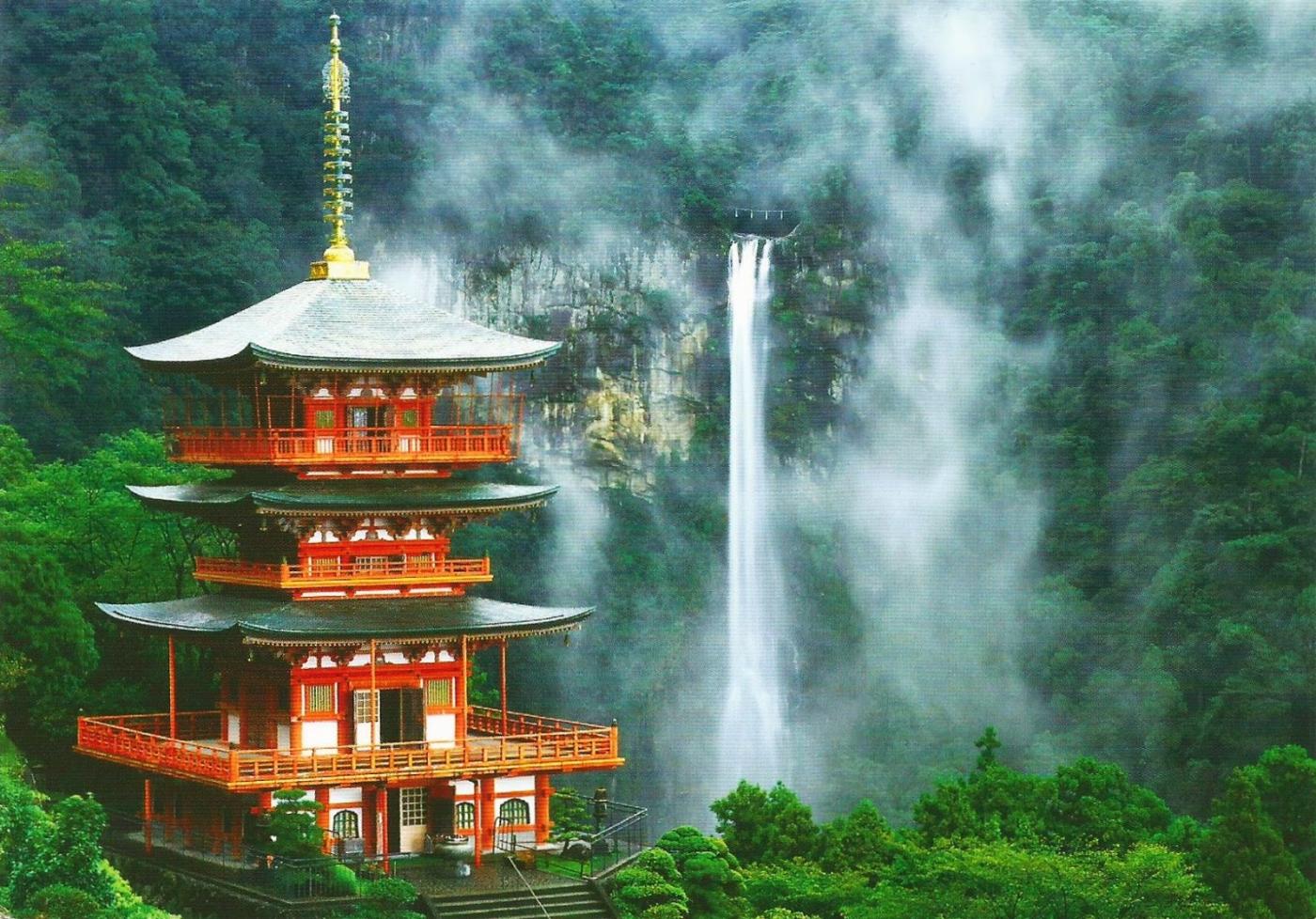
Nachi Taisha demonstrates the syncretism of Buddhism and Shinto in these places. Japan's highest waterfall, Nachi no Taki, is not far from the temple. It falls in a mighty stream from a height of 133 meters! The waterfall is surrounded by four dozen smaller counterparts, making this already beautiful area incredibly picturesque. Not far from Nachi Taisha is the Seigantoji Buddhist Temple, which offers a magnificent view of the Nachi-no-taki waterfall and the adjacent three-tiered pagoda.
Hongu Taisha is another of the three main shrines of Kumano. In front of the temple stands the world's tallest torii gate, 33 meters high! At the end of the excursion, you will rest at your Kumano hotel.
10
day
Kumano-Tobu-Ise-Nagoya.
06:00-07:00
Breakfast at the hotel and check out.
07:30
Meeting with the guide in the hotel lobby.
07:50-18:00
Excursion around the Sima Peninsula.
20:10
Arrival in Nagoya and transfer to the hotel.
Full description
Check out from the hotel and transfer to Ise Temple. You will enjoy a guided tour of Ise-Toba National Park on the Shima Peninsula.
The Shima Peninsula is home to the country's most sacred Shinto shrines, as the center of the Shinto religion for two millennia! The Ise-Jingu temple is Japan's most important religious center, a repository of Shinto treasures, and a destination for mass pilgrimage. It is also known simply as "Jingu" – "The Temple." Ise is also famous for Mikimoto Island, where coastal pearls are produced by the most famous manufacturer in the world.
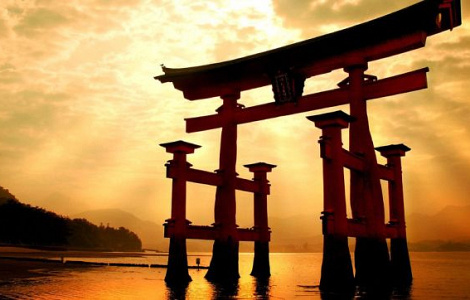
Ise-Jingu is the main Shinto shrine in Japan, where the Yata-no-Kagami, the sacred mirror of the goddess Amaterasu, the ancestress of the Japanese emperors, is enshrined. This mirror is one of the three main regalia of the emperor, inherited by the imperial family from Amaterasu, along with the sword and pendants, which are kept in other shrines. The temple complexes look very simple, almost like ordinary village buildings, but it is in this apparent simplicity that true greatness is hidden. The main temple is approached by an alley of centuries-old cryptomerias decorated with huge Torii, sacred orange gates that precede the entrance to the Shinto shrine. The temple area is quite extensive, there are many Shinto shrines, as well as utility rooms, including even its own sake brewery! Only Imperial family members and senior Shinto priests are allowed to enter the territory of the inner –main – temple, which is the abode of Amaterasu, Sun Goddess.
At the beginning of the first millennium AD, Emperor Suinin asked his daughter Yamato-hime, destined to be a priestess of Amaterasu, to find a place to build a sanctuary for the Sun Goddess, to keep the sacred mirror. It was the Ise region, finally, where the princess heard the goddess’s voice, commanding to build a shrine in this very spot. Thus, the temple was built, and Yamato-hime became its first priestess. During the course of 1,300 years, colorful religious ceremonies have been held in Ise, attracting pilgrims. Every twenty years, the wooden temple building is being reconstructed, as it is believed that the gods love cleanliness, including a new house.
In Japan, they say: "Japan is pearls, pearls are Mikimoto." The island is named after the legendary Kokichi Mikimoto, the first person to cultivate pearls for successful commercial production.
There are many pearl farms here, as well as a museum where you can learn about the history of pearls, the technology of their cultivation, and, in addition, learn about Kokichi Mikimoto himself. This man, who also gave the name to the world's most famous pearl brand, Mikimoto, first successfully cultivated pearls in 1893 after years of experiments. Six years later, the first Mikimoto boutique was opened, offering the world's best pearls.
Also, on Mikimoto Island, you can see traditional "ama" divers – sea gift collectors, such as algae, shellfish, and pearls. "Ama" means "wife of the sea." This is mainly a female profession since it is believed that the female body tolerates hypothermia better. The profession itself is very ancient, dating back to 2,000 years. Previously, "ama" dived for natural pearls, looking for shellfish, as well as for agar-agar algae and a variety of seafood, including lobsters, octopuses and sea urchins. Nowadays, functional necessity is combined with the entertainment of tourists watching the unusual work of the "ama." At the end of the excursion, transfer to the city of Nagoya. Upon arrival, there will be a transfer to your hotel.
11
day
Nagoya-Tokyo
07:00-09:00
Breakfast at the hotel and check out.
09:50
Meeting with the guide in the hotel lobby.
10:00-16:00
Tour of Nagoya.
16:30-18:20
Transfer to Tokyo and transfer to hotel upon arrival.
Full description
Nagoya… Saying the city's name out loud evokes a quiet sigh of admiration. A legendary town shrouded in mystical fog, the capital of luxury, where wedding processions stretch for a mile, and the homeland of warlords and craftsmen, whose skillful hands create eternal beauty.
In 113 AD, the 13th Emperor, Yamato Takeru, before dying from wounds received in a battle with the evil spirit of Mount Ibuki, left his wife his sword. It was called Kusanagi no Tsurugi, a symbol of bravery given to the first emperor of Yamato by his divine ancestors. His widow, Princess Miyazu, built the Atsuta Shrine in honor of her husband.
Since then, the Great Sword, one of the three relics of the Emperors of Japan, has been kept there. This is how the city of Nagoya was established. Transfer to Nagoya station and transfer by high-speed Shinkansen train to Tokyo. Upon arrival in Tokyo, a guide will meet you and drive you to your Tokyo hotel.
12
day
Tokyo. Free day.
You can take additional excursions
13
day
Departure.
00:00-24:00
Breakfast at the hotel, check-out and transfer to the airport.
Full description
Breakfast at the hotel, check out from the hotel. Meeting with the guide and individual transfer by car to the airport.






 Top
Top